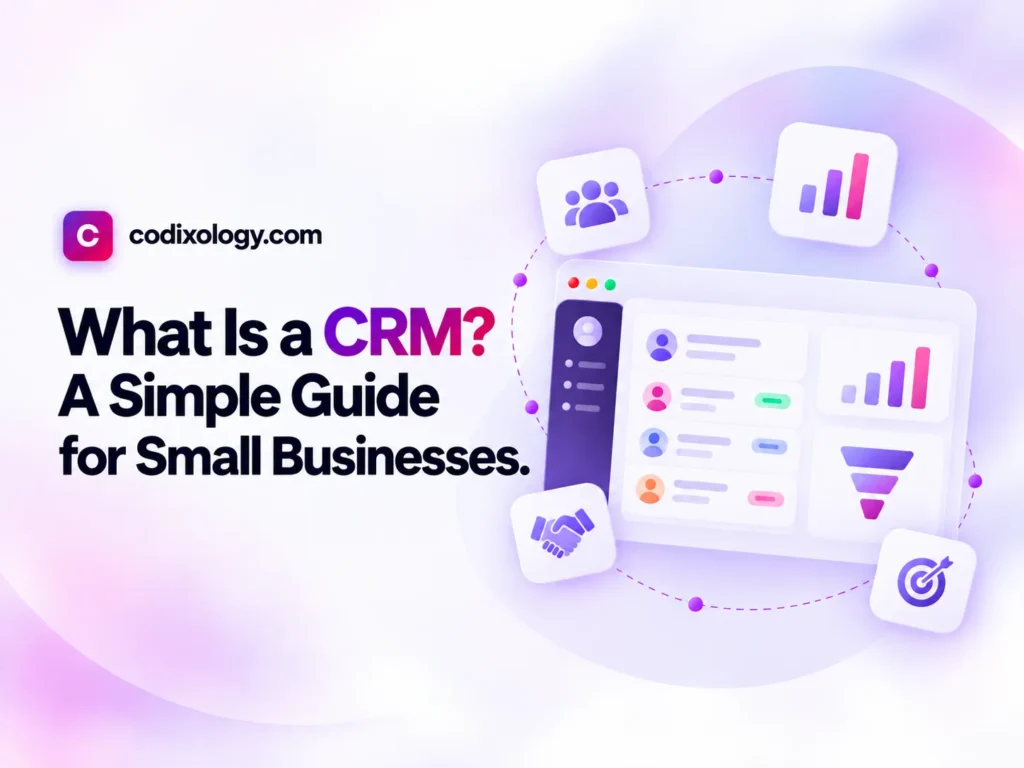
If you’ve ever lost track of a promising lead in a messy spreadsheet, or forgotten to follow up with a customer who was ready to buy, you already understand the problem a CRM solves. So, what is a CRM? A CRM, short for Customer Relationship Management, is a system that helps a business organize, track, and manage every interaction it has with leads and customers, from the first contact to the final sale and beyond.
At its core, a CRM replaces guesswork with a clear record. Instead of relying on memory, scattered emails, and sticky notes, you get one place where your whole team can see who a contact is, what was discussed, what stage they’re at, and what needs to happen next. For a small business, that single shift, from scattered notes to organized records, often makes the difference between a lead that closes and one that quietly disappears.
This guide breaks down what a CRM actually does, how it works, who needs one, and how to think about it without the sales-pitch language most vendor sites use.
What Is A CRM, Exactly?
CRM software explained simply: it’s a digital system, usually cloud-based, that stores information about your contacts, leads, and customers, and helps you manage your relationship with each of them over time.
The term “CRM” is used in three related ways, and it helps to know the difference:
- CRM as a strategy: the overall approach a business takes to build and maintain customer relationships.
- CRM as a process: the day-to-day activities of tracking leads, following up, and moving people through a sales or support pipeline.
- CRM as software: the actual tool (like HubSpot, Pipedrive, or Zoho) that supports the strategy and process.
When people ask “what is a CRM,” they’re almost always asking about the software. That’s what this guide focuses on.
A CRM is a centralized database of your contacts and customers, combined with tools to track communication, manage a sales pipeline, and automate routine follow-ups. Think of it as a shared memory for your business, one that doesn’t forget, doesn’t get sick, and doesn’t leave the company taking your customer knowledge with them.
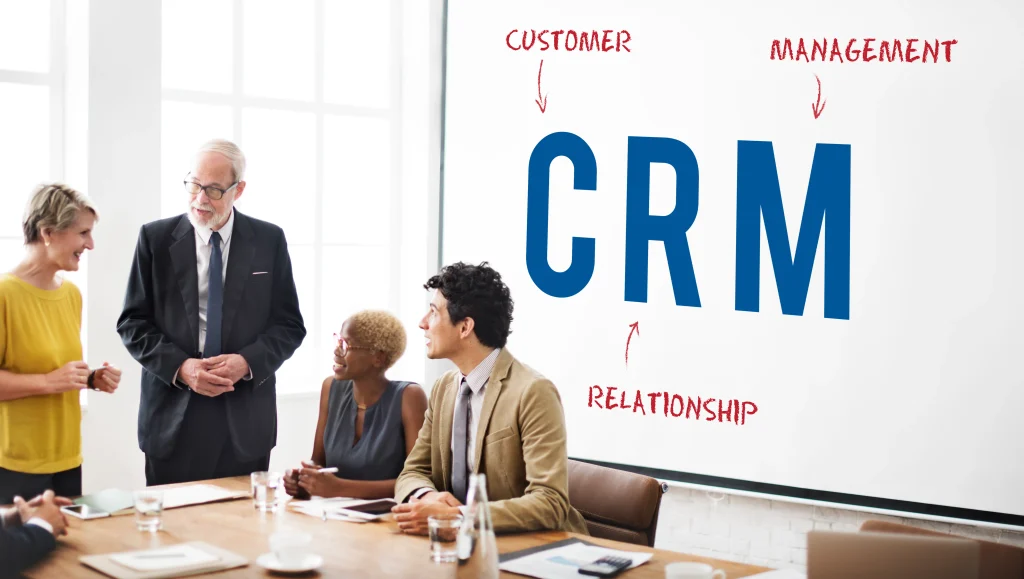
What Does a CRM Actually Do?
A modern CRM typically handles several connected jobs. Not every business uses every feature, but here’s the full picture of what’s under the hood.
1. Contact and Company Records
Every person and company you deal with gets a record: name, email, phone, company, role, and a history of every interaction. Instead of digging through old emails to remember who someone is, you open their record and see the full picture.
2. Pipeline and Deal Tracking
Most CRMs organize your sales process into stages, such as New Lead, Contacted, Proposal Sent, Negotiation, and Closed Won or Lost. This is usually shown as a visual pipeline (often called a kanban board), so you can see at a glance where every deal stands.
3. Activity and Communication Logging
Calls, emails, meetings, and notes get logged against each contact automatically or manually. If a teammate goes on leave, whoever picks up the account can read the history and continue the conversation without missing a beat.
4. Task and Follow-Up Reminders
CRMs prompt you (or your team) to follow up at the right time. This is one of the most underrated features: most missed sales aren’t lost because of price or fit, they’re lost because nobody followed up.
5. Reporting and Visibility
A CRM shows you where deals are stuck, how many leads convert, and which team members or channels perform best. For a small business owner, this turns “I think sales are okay” into an actual answer backed by numbers.
6. Automation
Many CRMs can automatically send a welcome email, assign a new lead to the right person, or move a deal to the next stage when a condition is met, cutting down repetitive manual work.
Why Businesses Use a CRM?
The purpose of a CRM boils down to one idea: nothing about your customer relationships should live only in someone’s head or inbox.
Common reasons small businesses adopt one:
- Leads stop falling through the cracks. Every inquiry gets logged and tracked, so follow-ups actually happen.
- The team stays aligned. Anyone can see the status of a deal or customer without asking around.
- Growth doesn’t break the process. A spreadsheet works for 20 contacts; it becomes unmanageable at 500.
- Customer history is preserved. When a team member leaves, the relationship data stays with the business.
- Decisions get easier. You can see which leads are worth chasing and which channels bring the best customers.
Who Actually Needs a CRM?
Not every business needs one on day one. A solo freelancer with five regular clients might genuinely be fine with a notebook. But a CRM tends to become valuable once any of these apply:
| Situation | Why A CRM Helps |
| More than one person talks to customers | Prevents duplicate or conflicting outreach |
| You’re generating leads regularly (ads, forms, referrals) | Stops leads from getting lost or forgotten |
| Your sales cycle has multiple steps or touchpoints | Keeps track of where each deal actually stands |
| You’ve ever said “wait, did we already follow up with them?” | A clear sign information is scattered |
| You want to measure and improve your sales process | You can’t improve what you can’t see |
If none of that sounds like your business yet, that’s a fair place to be. For a deeper look at whether now is the right time, see our guide on do I need a CRM.
What a CRM Is Not
It’s worth clearing up a few common misconceptions:
- A CRM is not just a contact list. A spreadsheet stores names; a CRM tracks relationships, history, and pipeline stage over time.
- A CRM is not only for sales teams. Many businesses use it for customer support, account management, or even hiring pipelines.
- A CRM is not automatically complicated. Some are genuinely simple to set up in an afternoon; complexity depends on the tool and how much you configure.
- A CRM does not replace judgment. It organizes information and reminds you of tasks, but decisions about how to handle a customer are still yours.
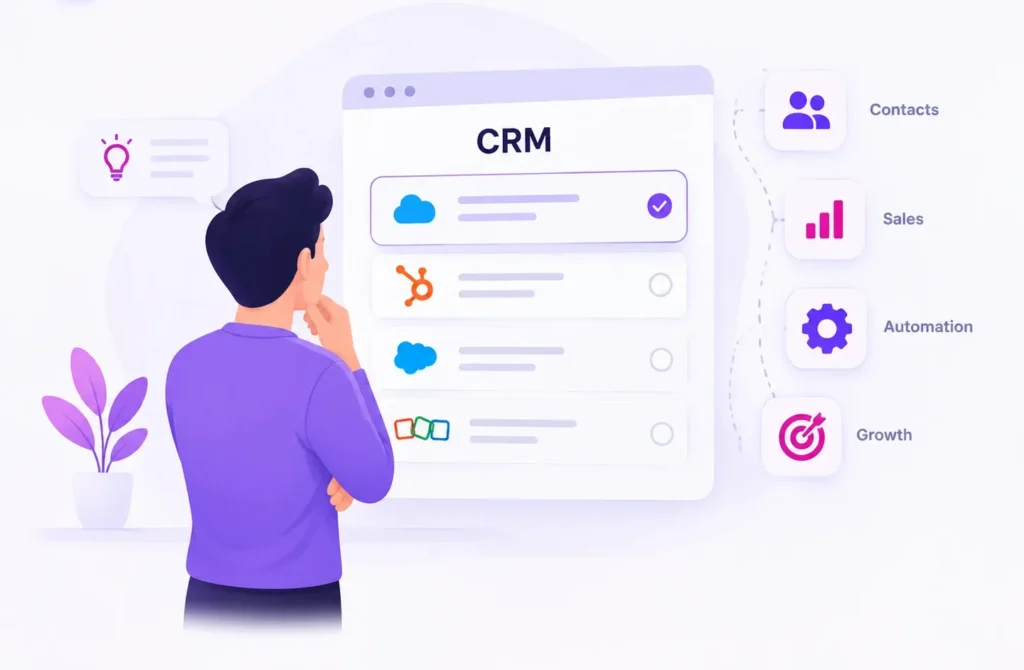
Key CRM Terms You’ll Run Into
A short glossary, since CRM software comes with its own vocabulary:
- Lead: a potential customer who hasn’t converted yet.
- Pipeline: the visual stages a deal moves through, from first contact to close.
- Contact record: the profile page for an individual person, containing their history and details.
- Deal (or opportunity): a specific potential sale being tracked.
- Automation (or workflow): a rule that triggers an action automatically, like sending an email when a form is submitted.
- Segmentation: grouping contacts by shared traits (industry, location, interest) for targeted outreach.
How a CRM Fits Into a Small Business’s Day-to-Day
Here’s a simplified example of how a CRM plays out in practice: a visitor fills out a contact form on your website. The CRM automatically creates a new contact record and alerts the assigned team member. That person reaches out, logs the call, and moves the deal to “Proposal Sent.” A few days later, the CRM reminds them to follow up because no response has come in. When the deal closes, the record stays in the system, so if that customer returns in six months, the full history is right there.
None of this requires a large team or a big budget. It simply requires a system that remembers so people don’t have to.
How a CRM Differs From Other Tools You Might Already Use
It’s easy to confuse a CRM with adjacent tools that solve related but different problems. Here’s how they compare:
| Tool | What It’s Built For | What it’s missing for Customer Management |
| Spreadsheets (Excel, Google Sheets) | Storing Structured Data | No automated reminders, no activity history, breaks down with multiple editors |
| Email Inbox | One-to-one Communication | Not shared, not searchable across a team, no pipeline view |
| Project Management Tool (Asana, Trello) | Tracking Internal Tasks and Projects | Not built around contacts, deals, or customer history |
| Accounting Software | Invoicing and financial records | Tracks transactions, not relationships or conversations leading up to them |
| CRM | Managing relationships and pipeline over time | Purpose-built for this; the other tools above are workarounds |
None of these other tools are “wrong” to use, plenty of small businesses run for years on spreadsheets and email. The difference is that a CRM is purpose-built for the specific job of tracking relationships over time, across a team, with reminders baked in. As a business grows past a handful of contacts, the workaround tools start requiring more manual effort to keep updated and accurate.
Expert Perspective: What Actually Matters When Getting Started
Based on hands-on testing of CRM platforms across different business types, the tools themselves tend to matter less than most people expect. The businesses that get the most value from a CRM are the ones that commit to logging activity consistently, not the ones that pick the “best” software on paper. A simple CRM used consistently beats a powerful CRM that half the team ignores.
This is echoed in independent product research: usability and ease of adoption are consistently cited as leading factors in whether a CRM implementation succeeds, more so than the sheer number of features available.
Practical Tips for Understanding If You’re Ready
- Audit your current system. If “the system” is a shared spreadsheet or someone’s inbox, write down what breaks when that person is unavailable.
- Count your active leads. If you can’t quickly say how many leads are currently in progress, that’s a sign visibility is already a problem.
- Ask your team. If more than one person touches customer conversations, ask whether they feel confident picking up where someone else left off.
- Start simple. You don’t need every feature on day one. A basic CRM used well outperforms an advanced one used poorly.
Related Reading
Once you understand what a CRM is, the natural next questions are whether you need one and which one fits your business. These guides go deeper:
- Do I need a CRM? An honest answer for small teams
- Best CRM for small business, hands-on tested
- HubSpot Free CRM, Review and all
The Bottom Line
A CRM is, at its simplest, a system that remembers your customer relationships so your business doesn’t have to rely on memory, scattered notes, or one person’s inbox. It won’t fix a broken sales process on its own, but it gives you the visibility and structure to build a better one. If you’re weighing whether it’s the right time to adopt one, or which option fits your business and budget, our other guides walk through both in detail.
Ready to see which CRM actually fits your business? Explore our hands-on tested CRM rankings to compare real options, pricing, and who each one is genuinely best for
Frequently Asked Questions
What does CRM stand for?
CRM stands for Customer Relationship Management. It refers both to the strategy of managing customer relationships and to the software used to support that strategy.
Is a CRM only for sales teams?
No. While sales is the most common use case, CRMs are also used for customer support, account management, marketing, and even recruiting, anywhere ongoing relationships with people need to be tracked.
What’s the difference between a CRM and an email inbox?
An inbox holds messages for one person. A CRM holds a shared, structured record of contacts, deals, and history that an entire team can access, search, and update together.
Do I need technical skills to use a CRM?
Most modern CRMs are built for non-technical users, with drag-and-drop pipelines and simple contact forms. Some setup (like importing existing contacts) may take a bit of time, but day-to-day use generally doesn’t require any coding or technical background.
How much does a CRM cost?
Pricing varies widely, from free plans with limited features to paid plans charged per user per month. We break down real CRM pricing in our CRM cost guide.
Can a very small business (just one or two people) use a CRM?
Yes. Many CRMs offer free or low-cost plans suited to solo founders and small teams. Whether it’s worth the setup time depends on how many leads and customers you’re managing, see our guide on do I need a CRM to decide.
Related reads
What Does a CRM Cost in 2026? Real Pricing Explained
If you’ve been searching for a straight answer to how much does a CRM cost, you’ve probably noticed most vendor pricing pages…
Do You Really Need a CRM? An Honest Answer for Small Teams
“Do I need a CRM?” is one of the most searched questions among small business owners, and most of the answers online…
Free vs Paid CRM: Which Is Right for Your Business?
Choosing between a free vs paid CRM is one of the first real decisions you’ll face once you’ve decided your business needs…
[…] What is a CRM? A simple guide […]