Best QuickBooks Alternatives for Small Businesses
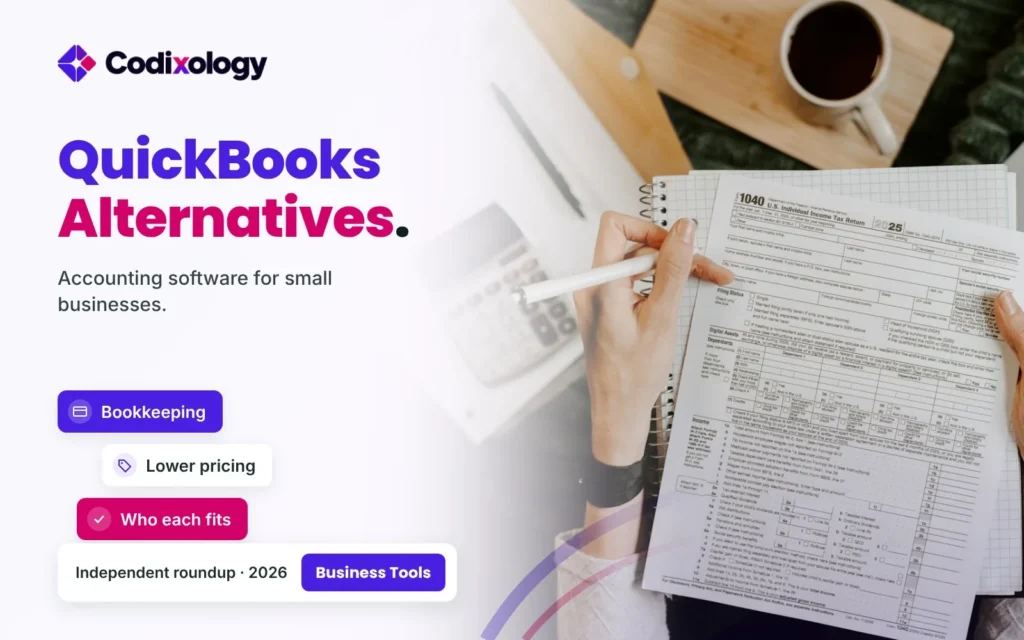
Looking for QuickBooks alternatives usually means one of a few specific things: you want something cheaper than quickbooks, a simpler interface for straightforward needs, or a feature set better matched to your specific business type. This guide covers credible alternatives worth considering, along with the specific reasons businesses typically look elsewhere.
QuickBooks remains a capable, widely used platform, but it isn’t automatically the right fit for every business. Understanding what specific gap you’re trying to fill helps you evaluate quickbooks competitors more effectively than browsing a generic list alone.
Why Businesses Look for QuickBooks Alternatives
Before evaluating specific platforms, it helps to understand the most common reasons businesses actively seek an alternative rather than staying with QuickBooks.
- Price sensitivity: Some businesses want a genuinely cheaper than quickbooks option without sacrificing core functionality
- Interface complexity: QuickBooks’ feature-dense layout can feel like more than a simple business genuinely needs
- Niche-specific needs: Freelancers, nonprofits, or specific industries sometimes need features QuickBooks doesn’t prioritize
- International business needs: Businesses outside the US sometimes find alternatives better suited to local tax and currency requirements
- Dissatisfaction with pricing changes: Some businesses switch after a pricing tier restructuring affects their specific plan unfavorably
QuickBooks Alternatives: Quick Comparison by Use Case
| Business Type | What to Prioritize in an Alternative |
|---|---|
| Freelancers and solopreneurs | Simple invoicing, straightforward expense tracking, low cost |
| Small businesses wanting a cleaner interface | Modern, intuitive layout without sacrificing core bookkeeping features |
| International businesses | Strong multi-currency support and local tax compliance features |
| Budget-conscious small businesses | Genuinely cheaper than quickbooks pricing at comparable feature levels |
| Businesses wanting extensive integrations | A strong existing ecosystem of compatible third-party tools |
A Step-by-Step Approach to Choosing a QuickBooks Alternative
- Identify your specific reason for wanting to switch. Price, interface complexity, and missing features each point toward different alternatives.
- List your genuinely non-negotiable features. Confirm any alternative you consider covers your actual core needs, not just a longer feature list overall.
- Compare current pricing directly against your required tier. A quickbooks alternative advertised as cheaper isn’t always cheaper once you reach the tier with features you actually need.
- Test the interface directly with your real data. A trial reveals practical fit better than reading feature descriptions or reviews alone.
- Check migration support and data import tools. A smoother transition process reduces the disruption of switching platforms.
- Confirm compatibility with your accountant or bookkeeper. Their familiarity with your chosen alternative can meaningfully affect your ongoing bookkeeping relationship.
Finding Something Genuinely Cheaper Than QuickBooks
Price sensitivity is one of the most common reasons businesses explore alternatives, but finding something genuinely cheaper than quickbooks requires comparing equivalent feature tiers, not just headline starting prices. A quickbooks competitor’s lowest tier might look cheaper on paper while lacking features you’d need to pay extra for elsewhere, effectively erasing the apparent savings.
Building an honest, feature-matched price comparison across your realistic shortlist, factoring in your actual required tier for each platform, gives a far more accurate picture than comparing advertised starting prices alone.
A Practical Example: A Freelancer Seeking Simplicity and Savings
Consider a freelance photographer finding QuickBooks’ interface more complex than their straightforward invoicing and expense tracking needs actually require, while also feeling their current tier costs more than their simple use case justifies. Evaluating a few dedicated freelancer-focused platforms, they find one offering the specific invoicing and basic expense features they need at a meaningfully lower price point.
Switching to this simpler, more affordable option, they find their day-to-day accounting tasks take less time and feel less overwhelming, without losing any feature they were actually using. This example shows that for straightforward use cases, quickbooks alternatives designed specifically for simpler needs can genuinely outperform a more full-featured platform on both cost and ease of use.
A Second Example: An International Business Needing Better Local Support
Now consider a small business operating primarily outside the United States, finding that QuickBooks’ local tax compliance features and currency handling don’t fully match their specific regional requirements. Researching quickbooks competitors with stronger international support, they find an alternative built with more robust multi-currency handling and local tax reporting formats relevant to their region.
This switch resolves a genuine functional gap rather than simply chasing a lower price, illustrating that QuickBooks alternatives sometimes solve a specific mismatch rather than purely a cost concern. These two examples show that the right alternative depends entirely on your specific reason for looking beyond QuickBooks in the first place.
Evaluating Quickbooks Competitors on Migration Ease
Switching accounting platforms always involves some data migration effort, and this shouldn’t be underestimated when comparing quickbooks competitors. Look specifically for alternatives offering dedicated QuickBooks import tools or migration support, since these can meaningfully reduce the manual effort of transferring historical transactions, invoices, and customer records accurately.
Some providers offer white-glove migration assistance specifically for businesses switching from QuickBooks, recognizing it as a common enough transition to warrant dedicated support. Asking directly about this during your evaluation, rather than assuming migration will be straightforward, helps you avoid an unpleasant surprise during the actual switch.
Considering Whether Xero Is the Right Alternative for You
Among quickbooks competitors, Xero is consistently one of the most frequently compared, given its similarly comprehensive feature set and strong market presence. Businesses considering Xero specifically as their QuickBooks alternative should weigh its generally cleaner interface and strong multi-currency support against QuickBooks’ more extensive US-based accountant familiarity and payroll integration.
This particular comparison is common enough, and different enough from evaluating smaller or niche-focused alternatives, that it’s worth treating as a distinct decision from broader alternative shopping if Xero is genuinely on your shortlist.
Alternatives Worth Considering by Specific Priority
Rather than a single ranked list, it’s more useful to think about quickbooks alternatives grouped by the specific priority driving your search. If cost is your primary concern, focus your shortlist on platforms explicitly marketed as cheaper than quickbooks at comparable feature levels, then verify that claim yourself against your required tier rather than taking marketing copy at face value.
If interface simplicity is your priority, prioritize platforms consistently described in reviews as easier to learn, and confirm this directly with a free trial rather than relying on descriptions alone. If a specific missing feature is your reason for looking at quickbooks competitors, such as stronger multi-currency support or industry-specific reporting, narrow your search specifically to alternatives known for strength in that particular area rather than evaluating generally.
Timing Your Switch Away From QuickBooks
Beyond choosing the right alternative, timing your actual switch matters almost as much as the choice itself. Migrating during a low-activity period, rather than during your busiest season or right before a major tax deadline, reduces the risk of disruption while your team adjusts to new software.
Most businesses find it easier to complete a switch to quickbooks alternatives during a natural lull, right after a major reporting period closes, or during a planned slower season, giving your team time to adapt before the next high-pressure period begins.
Common Weaknesses to Watch For in QuickBooks Alternatives
- Assuming cheaper automatically means comparable feature coverage. Always compare equivalent feature tiers, not just headline starting prices.
- Underestimating migration effort and data transfer accuracy. A smoother-looking interface doesn’t guarantee a smooth transition process.
- Choosing a niche alternative without confirming it covers your full actual needs. Specialized platforms sometimes lack features a more general platform includes by default.
- Not confirming accountant or bookkeeper compatibility with your chosen alternative. This can create unnecessary friction in your ongoing bookkeeping relationship.
- Switching primarily out of frustration without confirming the alternative actually resolves it. Confirm your specific pain point is genuinely addressed before committing to a switch.
Common Mistakes When Evaluating QuickBooks Alternatives
- Comparing only advertised starting prices rather than equivalent feature tiers. This often produces a misleading sense of actual savings.
- Not testing the alternative directly with real business data. A hands-on trial reveals practical fit better than reading marketing materials alone.
- Ignoring migration support and data import quality. This significantly affects how disruptive your actual switch will be.
- Choosing based on price alone without confirming your core features are covered. A cheaper platform missing an essential feature isn’t genuinely a better value.
- Not confirming your accountant’s familiarity with the new platform. This practical factor is easy to overlook during evaluation.
Expert Perspective
Small business software guidance consistently notes that switching core accounting platforms carries genuine transition costs, in time, training, and migration effort, that should be weighed against the specific benefit the switch is meant to achieve. This applies directly to evaluating quickbooks alternatives, where the right choice depends on clearly identifying and confirming your specific reason for wanting a change.
For businesses with complex accounting needs or industry-specific compliance requirements, consulting with a qualified accountant about alternative platform fit is a reasonable step beyond a self-directed feature comparison.
Practical Tips for Choosing a QuickBooks Alternative
- Identify your specific reason for wanting an alternative before browsing options broadly.
- Compare equivalent feature tiers when evaluating price, not just advertised starting prices.
- Test your top alternative directly with real business data before committing.
- Confirm migration support and data import quality to reduce transition disruption.
- Verify your accountant or bookkeeper’s familiarity with your chosen alternative.
Related Reading From Codixology
For a broader comparison of accounting platforms suited to small businesses generally, Codixology’s best accounting software for small business guide covers additional options beyond QuickBooks.
For a detailed look at one of the most commonly considered alternatives, Codixology’s QuickBooks vs Xero comparison breaks down the two platforms side by side.
Frequently Asked Questions
What are the best QuickBooks alternatives for small businesses? +
The best alternative depends on your specific reason for switching, price sensitivity, interface complexity, or niche-specific needs, so evaluating a shortlist against your actual requirements is more useful than a single universal recommendation.
Is there a genuinely cheaper than quickbooks option available? +
Yes, several alternatives offer comparable core features at a lower price point, though it’s important to compare equivalent feature tiers rather than headline starting prices alone.
Why would a small business switch away from QuickBooks? +
Common reasons include price sensitivity, wanting a simpler interface, needing niche-specific features, requiring stronger international support, or dissatisfaction with a pricing tier change.
Is Xero the best QuickBooks alternative? +
Xero is one of the most frequently compared quickbooks competitors, given its similarly comprehensive feature set, though the best choice still depends on your specific needs and priorities.
How difficult is it to migrate from QuickBooks to another platform? +
This varies by alternative and by your data complexity, but many providers offer dedicated QuickBooks import tools or migration support to ease the transition.
Will switching to a QuickBooks alternative save me money? +
It can, but only if you compare equivalent feature tiers rather than advertised starting prices, since apparent savings sometimes disappear once you reach the tier with features you actually need.
Do QuickBooks alternatives support the same integrations? +
This varies by platform. Confirming your specific must-have integrations are supported before switching is an important step in evaluating any alternative.
Should I check with my accountant before switching from QuickBooks? +
Yes, confirming your accountant or bookkeeper’s familiarity with your chosen alternative can meaningfully affect the smoothness of your ongoing bookkeeping relationship.
The Bottom Line
The right QuickBooks alternative depends on clearly identifying your specific reason for wanting a change, whether that’s finding something cheaper than quickbooks, a simpler interface, or better-suited niche features. Comparing equivalent feature tiers and testing alternatives directly with real data produces a more confident choice than browsing a generic list of quickbooks competitors.
Codixology recommends identifying your specific pain point first, then testing your top alternative directly before committing to a full switch.
Ready to compare accounting software beyond QuickBooks? Explore Codixology’s full accounting software comparison library to find your ideal fit.